

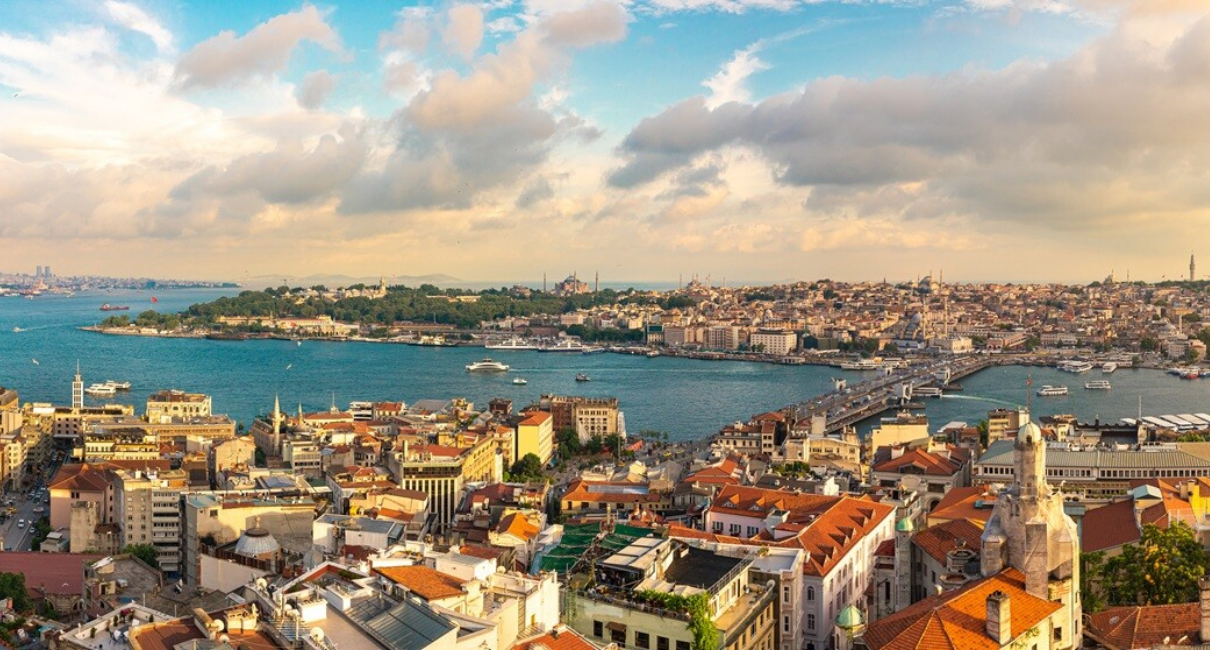
Known in Turkish as Haliç, the Golden Horn is far more than a geographical feature. It is a place where myth meets history, where empires rose along calm waters, and where Istanbul’s cultural memory continues to flow. Stretching inland from the Bosphorus like a natural harbor, the Golden Horn has shaped the destiny of the city for more than two millennia.
What Is the Golden Horn?
The Golden Horn is a horn-shaped estuary where the waters of the Bosphorus and the Sea of Marmara meet the inland streams of Istanbul. Measuring roughly 7.5 kilometers in length, it forms one of the world’s most naturally protected harbors. This unique shape not only gave the inlet its name but also made it strategically priceless throughout history.
Ancient sailors described the estuary as shimmering gold at sunset—hence the poetic name Golden Horn. Calm waters, gentle curves, and shelter from strong winds made it an ideal anchorage long before modern ports existed.
From Byzantium to Constantinople: A Strategic Lifeline
Long before Istanbul became Istanbul, the Golden Horn defined Byzantium and later Constantinople. Its sheltered waters allowed trade ships to dock safely, enabling commerce, defense, and naval power. During the Byzantine era, a massive iron chain was famously stretched across the mouth of the Golden Horn to block enemy fleets—one of history’s most iconic defensive tactics.
When the Ottomans conquered the city in 1453, the Golden Horn retained its importance. Shipyards, docks, and imperial facilities flourished along its shores, turning the inlet into a living artery of the empire.
Legends of the Golden Horn
The Golden Horn is also deeply woven into mythology and legend. One of the most fascinating stories traces back to ancient Greek mythology. According to legend, Zeus transformed his lover Io into a cow to hide her from Hera’s jealousy. As Io wandered the world, she crossed the waters near present-day Istanbul—leaving behind a story that mythologically ties the Golden Horn to divine drama and transformation.
Another enduring legend claims the waters were once blessed by the gods, promising prosperity to any city that rose along its banks. Whether believed literally or symbolically, history seems to have fulfilled that prophecy.
Neighborhoods That Tell Stories
The shores of the Golden Horn are lined with some of Istanbul’s most character-rich districts:
- Balat and Fener, known for colorful houses, synagogues, churches, and deep multicultural roots
- Eyüp, a place of spiritual importance and pilgrimage
- Karaköy and Galata, where commerce, art, and modern life meet history
Each neighborhood reflects a different chapter of the Golden Horn’s layered identity.
The Golden Horn Today: From Industry to Culture
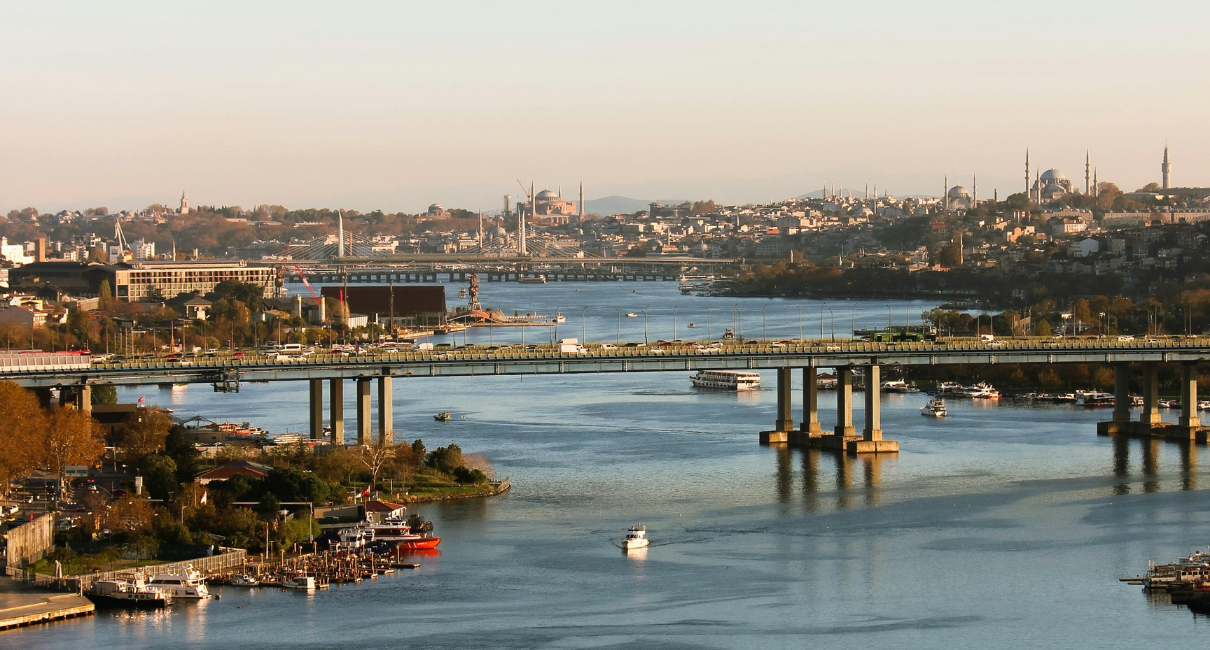
In the 20th century, industrialization took a heavy toll on the Golden Horn. Factories polluted the waters, and its beauty faded. However, extensive environmental restoration projects transformed the estuary once again.
Today, the Golden Horn is a symbol of urban renewal. Clean waters, landscaped parks, museums, walking paths, and cultural centers line its shores. Locals jog, artists exhibit, and visitors stroll—often unaware they are walking through one of the most historically dense landscapes in the world.
A Scenic Walk Through History
Walking along the Golden Horn is like moving through time. Starting from the Galata side, crossing historic bridges, and heading inland, you pass Ottoman mosques, Byzantine remnants, and modern cultural institutions. The view constantly changes—minarets replace warehouses, boats glide past ancient walls, and sunsets paint the water in warm amber tones.
It’s no coincidence that photographers, writers, and filmmakers continue to draw inspiration from this quiet yet powerful waterway.
Why the Golden Horn Still Matters
The Golden Horn is not merely a backdrop to Istanbul. It has seen myths born, empires clash, faiths coexist, and cultures blend. Unlike grand monuments that stand still, the Golden Horn flows, connecting past and present with effortless grace.
For travelers seeking to understand Istanbul beyond postcards, the Golden Horn offers something rare: a sense of continuity. It reminds us that cities, like rivers, are shaped by time, stories, and the people who pass through them.